How We Work
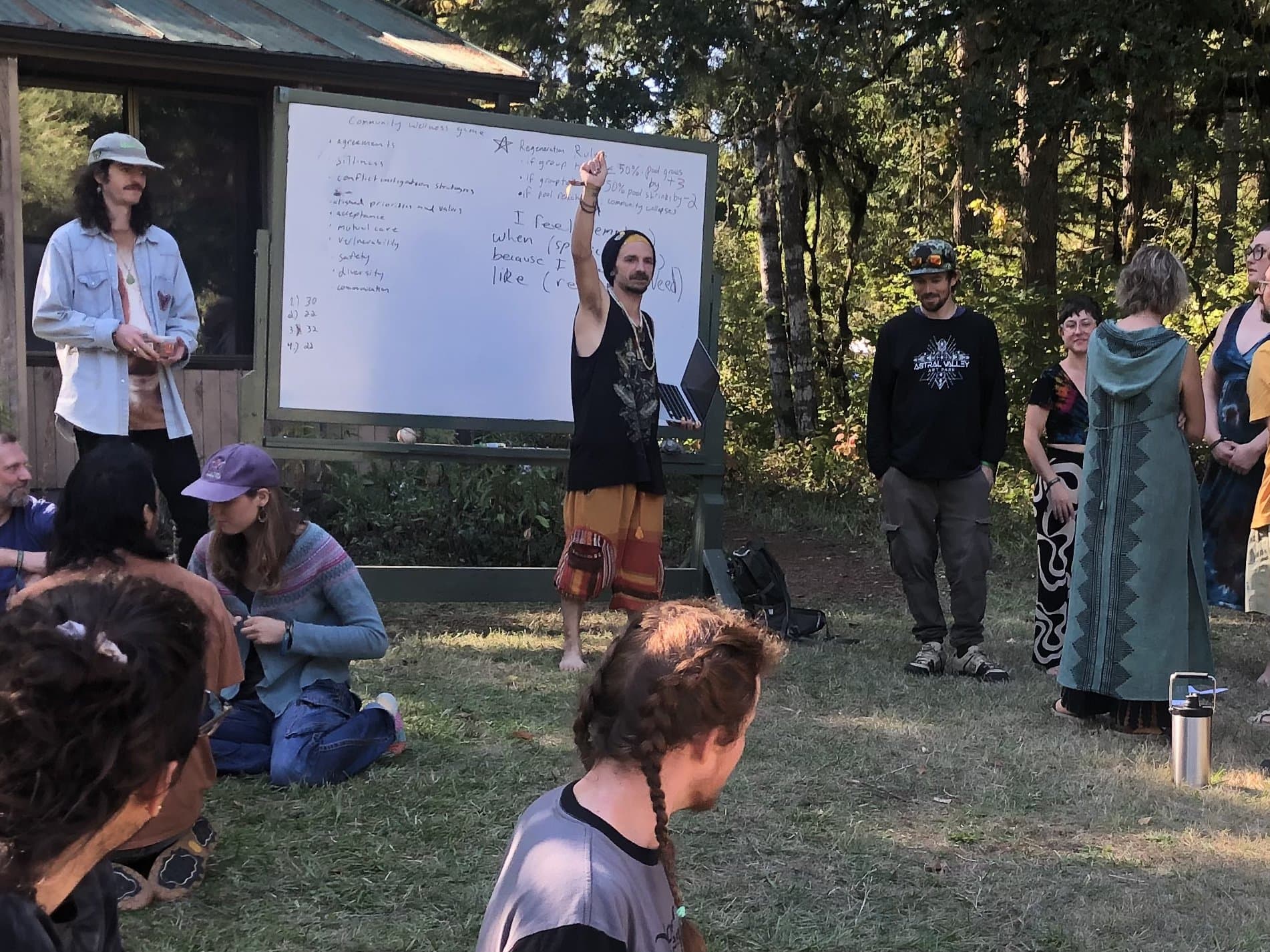
Experiential learning that sticks. We believe learning happens through doing, feeling, and reflecting.
Our Five Pillars
Every experience weaves together these five methodologies for transformative, lasting learning.
Interactive Role-Plays & Simulations
Practice real skills in safe environments where mistakes become learning opportunities. Our scenarios mirror actual workplace situations so you can build confidence before the stakes are high.
Games & Activities
Playful exercises that reveal deep insights about communication, cooperation, and human dynamics. Play opens neural pathways that lectures simply can't reach.
Facilitated Dialogue
Structured conversations that help groups navigate differences and discover shared wisdom. We create the container; your collective intelligence does the rest.
Embodied Practice
Somatic exercises that help you understand concepts not just intellectually, but in your body and nervous system. When knowledge lives in the body, it's accessible under stress.
Reflection & Integration
Dedicated time to process, make meaning, and figure out how to apply what you've learned. Without integration, even powerful experiences fade.
The Science Behind It
Traditional training fails because of the knowing-doing gap—people remember information but can't apply it. Our approach closes that gap.
Lecture alone
Reading
Audiovisual
Practice & application
Teach others / immediate use
Source: National Training Laboratories Learning Pyramid
How Adults Actually Learn
Based on Malcolm Knowles' andragogy research, adults learn best when five conditions are met.
Learning is problem-centered, not content-centered.
Experience serves as the foundation for new knowledge.
Learning is immediately applicable to real challenges.
Learners are active participants, not passive recipients.
Learning addresses intrinsic motivations like competence and connection.
Our methodology directly applies this research—centering each experience around real challenges, using role-plays that mirror actual work situations, providing immediately usable tools, creating collaborative spaces, and connecting skill-building to purpose.
The Neuroscience of Embodied Learning
Research shows why learning through experience creates deeper, more lasting change.
Mirror Neurons
When we observe and practice behaviors, our mirror neuron systems activate as if we're actually experiencing the situation—building empathy and skill simultaneously.
Procedural Memory
Skills learned through practice are stored in procedural memory (like riding a bike), making them more automatic and accessible under stress than information stored only conceptually.
Emotional Learning
The amygdala and hippocampus work together to encode emotionally significant experiences more deeply, which is why experiential learning sticks.
Neuroplasticity
Our brains physically change based on what we practice. Repeated experiential practice literally rewires neural pathways, creating lasting behavioral change.
Sources: Giacomo Rizzolatti's mirror neuron research; Stephen Porges' Polyvagal Theory; Embodied Cognition field research
Trauma-Informed Practice & Nervous System Science
Based on Dr. Stephen Porges' Polyvagal Theory, we design every experience with the nervous system in mind.
Safety Is Biological
- Clear agreements and structure
- Opportunities to move and regulate
- Honoring boundaries and pacing
- Building connection before challenge
Co-Regulation Matters
- Paired exercises and small group work
- Modeling regulated presence
- Normalizing emotional experiences
- Creating spaces for authentic human connection
Practice Must Match Reality
- Engaging the nervous system during practice
- Building skills accessible under stress
- Gradual challenge progression
- Real-world scenario integration
Sources: Stephen Porges, The Polyvagal Theory; Bessel van der Kolk, The Body Keeps the Score
The Bottom Line
Our approach combines neuroscience (how brains change), adult learning theory (how adults learn), trauma-informed practice (how to create physiological safety), systems thinking (how organizations change), and collective intelligence research (how groups solve problems together).
Learning that sticks. Skills you'll actually use. Transformation that lasts.
We don't just tell you what to do differently—we create the conditions for you to become different.
Ready to Transform Your Organization?
Let's discuss how our experiential approach can help your team build the skills and resilience needed to navigate complexity with wisdom and compassion.